



Discover the Arroscia Valley
Between nature and culture, a region to explore and experience all year round


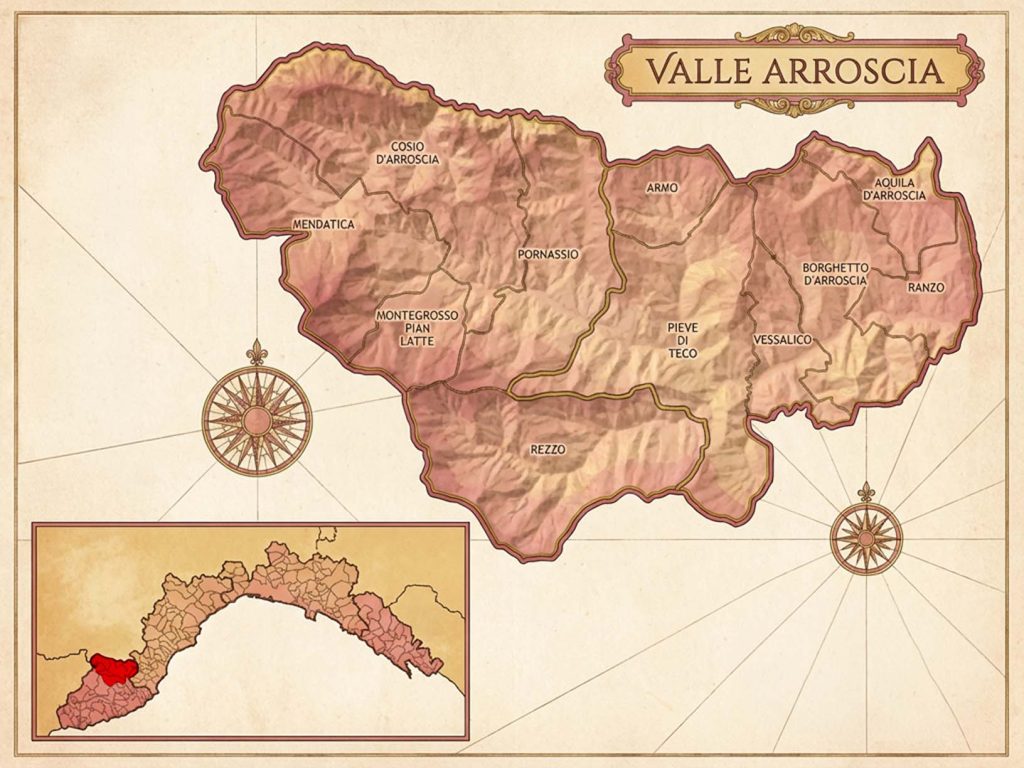
A hidden gem between the sea and the mountains, waiting to be discovered. Nature hikes, activities for the whole family, and unique cultural attractions: the Arroscia Valley never ceases to amaze and never disappoints.

Nature & Outdoors
NATURE & OUTDOORS
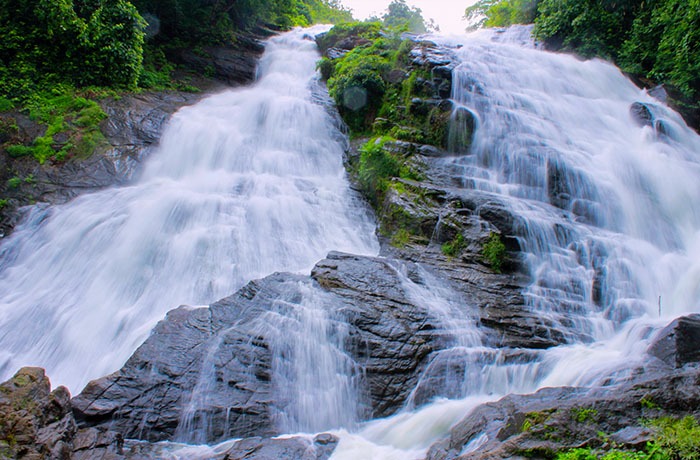
The Arroscia Waterfalls and the Poilarocca “Malga”
The Arroscia waterfalls can be easily reached on foot along a trail that begins in the center of Mendatica. Along the way, you can admire the small Church of Santa Margherita, which houses 15th-century frescoes attributed to Guido da Ranzo. After crossing an ancient medieval bridge, you are finally rewarded with the sight of the waterfalls, plunging from a height of 30 meters.
Those who wish to continue can reach the Poilarocca “malga” (alpine summer pasture). Here, during the last century, families from Mendatica would move for the summer season to harvest hay and tend to their livestock. Today, only the ruins of these ancient dwellings remain, yet they continue to stand as a powerful testament to the traditional pastoral life of the past.
NATURE & OUTDOORS
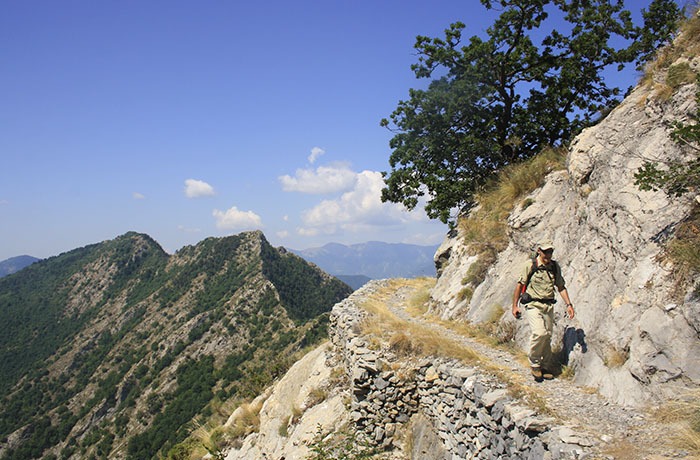
Alta Via dei Monti Liguri
The Alta Via dei Monti Liguri, the renowned hiking itinerary that connects Ventimiglia to Ceparana (La Spezia), crosses the Arroscia Valley territory along the stage linking San Bernardo di Mendatica to Colle di Nava. The route can be covered on foot; after passing Colla Fieno, a steep variant allows hikers to climb the ridge of Monte Escio, home to the magnificent.
Arts & Culture
ARTS & CULTURE
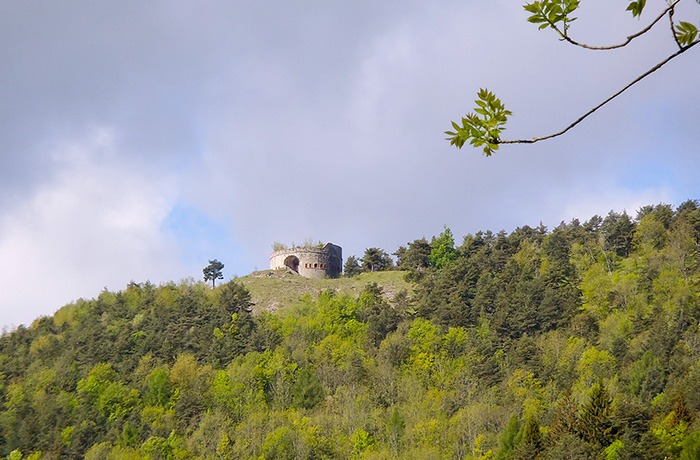
The Forts of Nava
Between 1880 and 1888, five fortifications were erected on Colle di Nava, forming a defensive complex designed to monitor the transit between Liguria and Piedmont. The most famous are Forte Centrale, which is open for interior visits during the summer season (Saturday and Sunday afternoons from June to September), and Forte Montescio, built a few kilometers away from the center of Nava to oversee the Tanarello – Saccarello area. Today, Forte Montescio can be reached on foot via a dirt path that starts from the road connecting the Pass with the village of San Bernardo di Mendatica.
ARTS & CULTURE
Santuario Maria Bambina
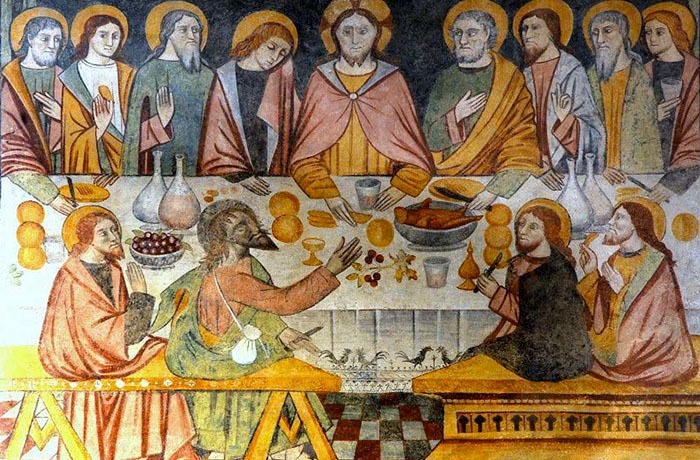
From the center of Rezzo, an easy walk along a historic mule track—perfectly suited for families—leads to the 15th-century Sanctuary of Maria Bambina. Inside the building, you can admire more frescoes by Guido da Ranzo depicting scenes from the life of Jesus.
ARTS & CULTURE
The Ubaga Masks
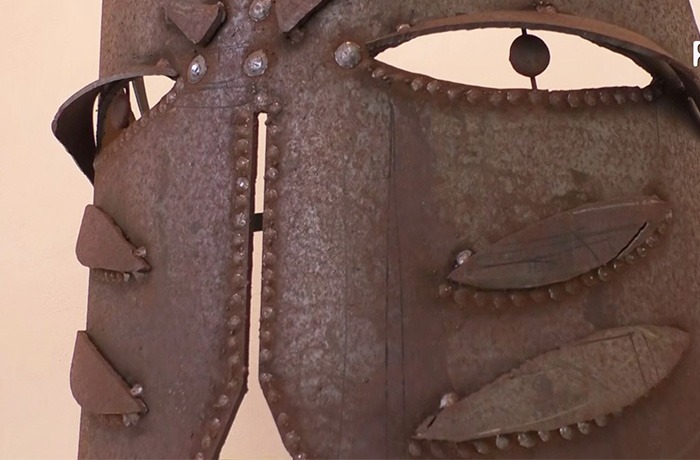
The works exhibited in the Ubaga Masks Museum in Piazza Borelli stand as a tangible testament to the rural culture and spirituality of Western Liguria, evoking the sacred value that the people of the past attributed to nature. They represent a clear reference to Ubaga, a small village in the middle of the Arroscia Valley, and their names are linked to local figures or regional toponyms. The masks, divided into benign and malevolent, were worn by farmers to invoke supernatural entities during midsummer propitiatory rituals to ensure a bountiful harvest.
ARTS & CULTURE
The Montegrosso Pian Latte Open-Air Museum
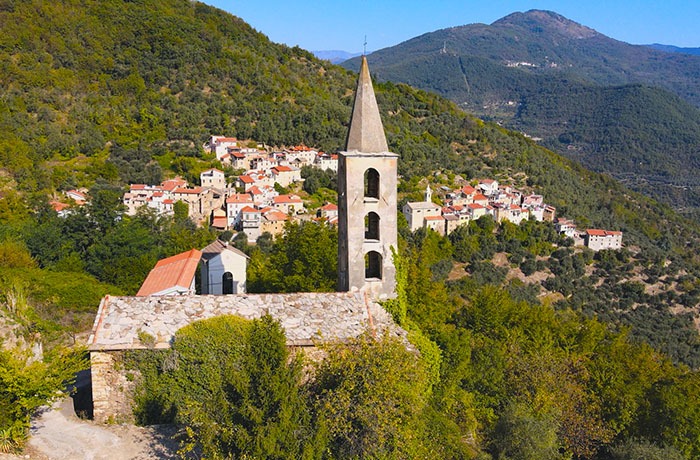
Montegrosso is home to a unique museo diffuso (open-air museum) known as “Il bosco addomesticato” (The Tamed Forest), which is divided into three stages. The first is the Chestnut Museum, which illustrates the processing of this fruit—the backbone of the village’s economy during the last century—alongside all the traditional tools used in its production.
Tucked away within the village’s “caruggi” (narrow historic alleys) lies the ancient chestnut drying house, known in the local dialect as “u canissu”, which is still used today by a local farmhouse. Just above the village, you can find the reconstruction of a “carbonaia” (charcoal kiln)—a clearing once used for charcoal production, easily recognizable by the deep black color of the soil.
ARTS & CULTURE
Teatro Salvini
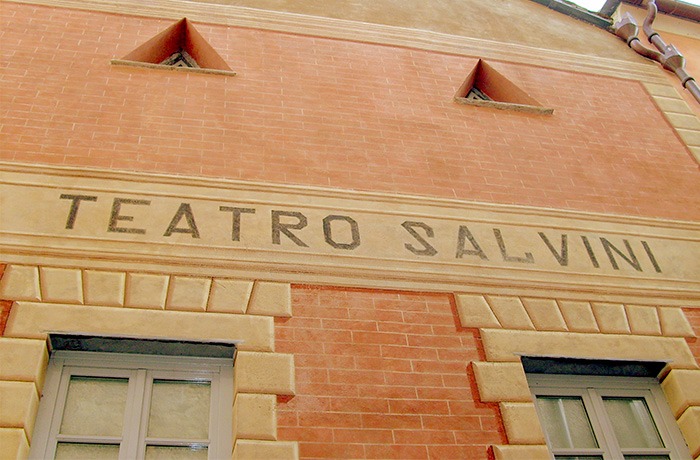
Tucked away among the “caruggi” of Pieve di Teco lies the Teatro Salvini, built in the early 19th century on the initiative of Giuseppe Manfredi, a prominent figure from one of the town’s most influential families. With a capacity of just 99 seats, it is the second smallest theater in Italy. It features a stage, a curtain, a stalls area, and an upper gallery, all beautifully crafted from wood. The theater enjoyed a golden age until the 1920s, even hosting the renowned theater company of Gilberto Govi. After a period of neglect, it was lovingly restored and brought back to life in 2004.
ARTS & CULTURE
Santuario Madonna dei Fanghi
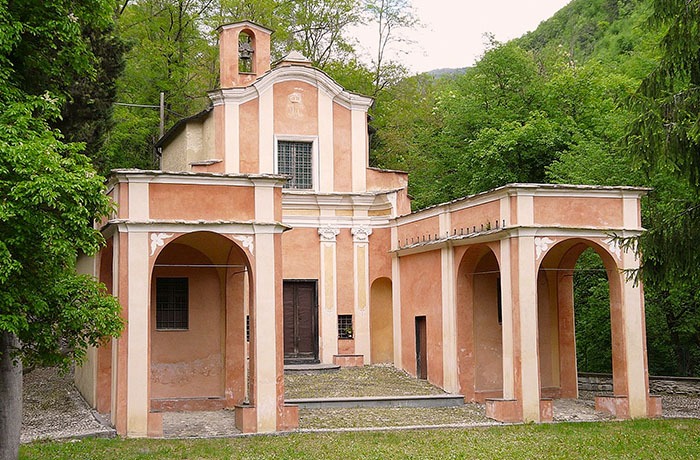
With a short detour from the provincial road connecting Pieve di Teco to Moano, you can reach—also on foot—the Sanctuary of Madonna dei Fanghi, dating back to the first half of the 17th century. Surrounded by lush greenery, it offers an oasis of peace and relaxation for couples of all ages and small groups. For further information on this route and to discover more exciting itineraries connecting the town with its hinterland, please visit the website.
ARTS & CULTURE
Cosio D’Arroscia
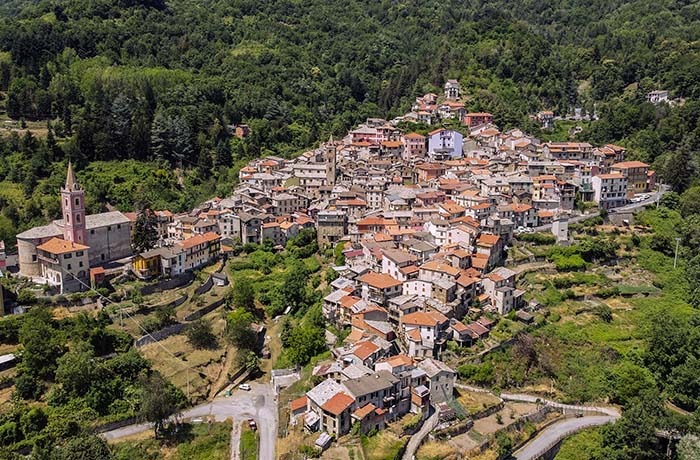
This small village is surrounded by the mountains of the Ligurian Alps and enjoys an excellent geographical position, located just a short distance from the sea and the main towns in the area. The historic center of Cosio D’Arroscia is incredibly charming, with its narrow cobblestone streets and stone houses climbing up the slopes of the surrounding hills.
GASTRONOMy and Heritage
GASTRONOMY AND HERITAGE
The “Cucina Bianca” (White Cuisine)
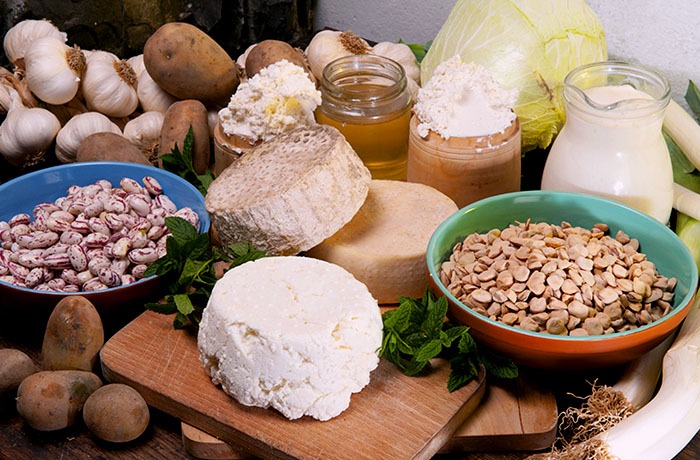
The upper Arroscia Valley is renowned for its “cucina bianca” (white cuisine), a culinary heritage inherited from the ancient “civiltà delle malghe” (the alpine pasture civilization). This tradition was shaped by shepherds who traveled to high-altitude pastures with their livestock. Spending long periods away from home—often in total solitude—they needed to prepare nutritious yet quick meals.
This style of cooking relied on simple ingredients such as flour-based products, dairy, and pale-colored vegetables like potatoes, leeks, garlic, and turnips, as well as wild herbs gathered along the transhumance trails.
Today, several traditional dishes remain celebrated, including:
- Streppa e caccia là: a rustic pasta made by boiling thin strips of water-and-flour dough, literally named after the action of “tearing and throwing them in” the pot.
- Bruss: a pungent, fermented cheese spread made from ricotta.
- Turle: a fresh pasta stuffed with potatoes and mint, traditionally tossed with butter and sage.
- Ajè: a robust garlic and bruss sauce.
GASTRONOMY AND HERITAGE
Ormeasco Wine
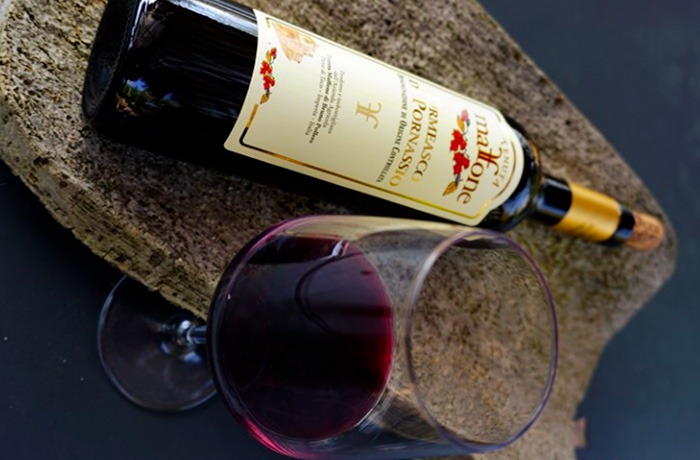
The Arroscia Valley guards one of the smallest DOC wine regions in Italy: Ormeasco di Pornassio. Today, a mere handful of local wineries produce just a few thousand bottles a year of this distinctive red wine. Production includes the refined Superiore variant (released on the market one year after the harvest) and “sciac-trà”, a very light, delicate rosé perfectly suited even for the most sophisticated palates.
Contacts
+39 3357085636
prenotazioni@dellangeloalbergo.it
Piazza Carenzi, 11, 18026 Pieve di Teco IM

Check Availability
Where we are
Albergo dell’Angelo – Piazza Carenzi, 11, 18026 Pieve di Teco IM S.A.S di Bennari Safae & C. P.IVA: 01833890088 –Powered by Pronto Azienda